
What Happens If You Choose the Wrong Combi Boiler Capacity?
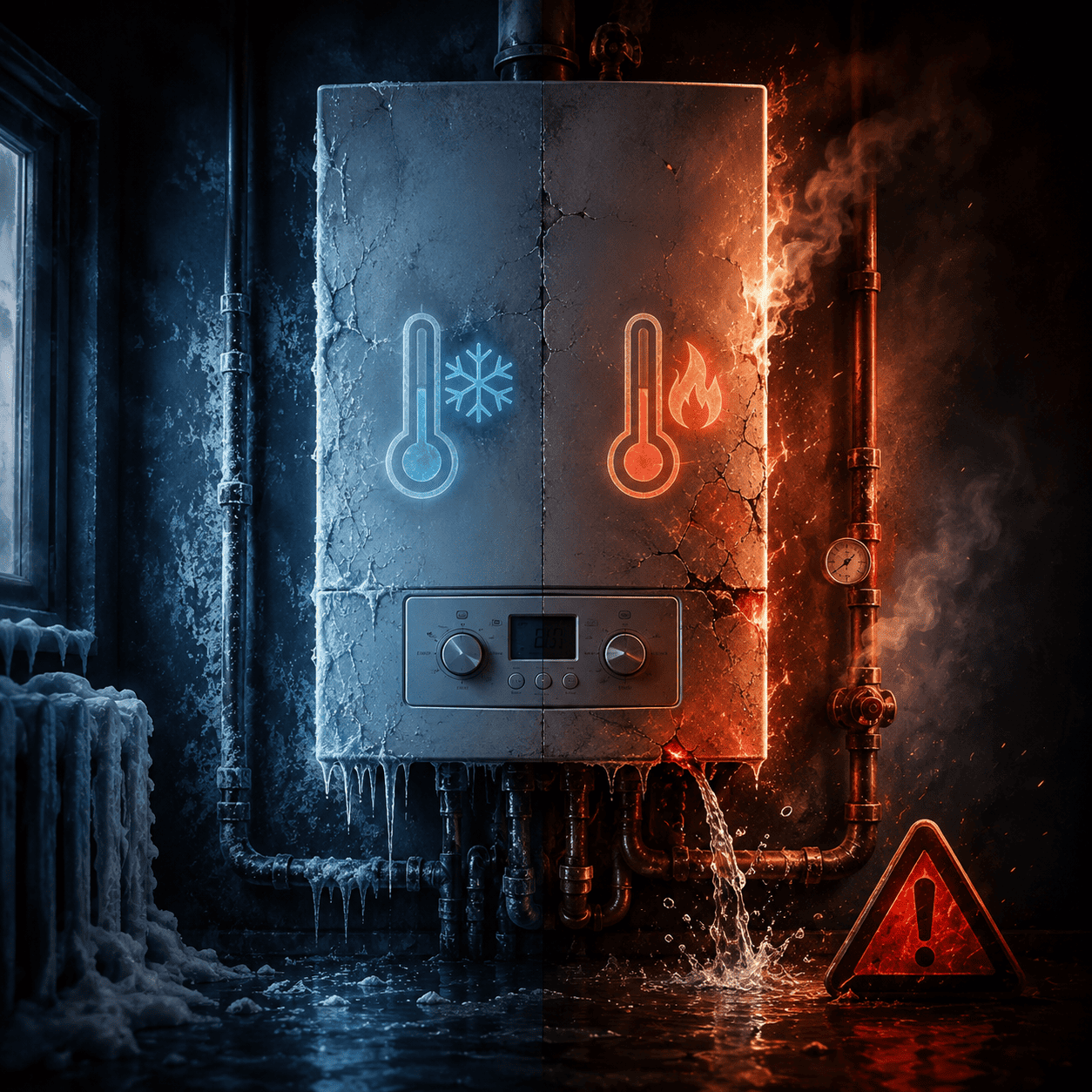
Creating comfortable living conditions in apartments or private houses, ensuring even heat distribution during winter months, and keeping energy costs to a minimum directly depends on properly selected heating equipment. When purchasing a Combis, which is considered the heart of a central or individual heating system, one of the biggest mistakes made is miscalculating its thermal power measured in kilowatts (kW). Quite often, users either prefer under-powered models to "save money initially" or choose excessively powerful units thinking "it will definitely heat up better." However, both misconceptions ultimately lead to financial losses and premature failure of the equipment.
Selecting top-quality Heating systems tailored precisely to your property's total floor area, insulation level, and radiator capacity is the most effective step to prevent unexpected future expenses.
Problems Arising from Choosing an Under-Powered (Low Kilowatt) Combi Boiler
If your home's total heat loss and square footage exceed the nominal capacity of the combi boiler, the appliance will be forced to operate at maximum capacity continuously. This scenario brings several negative consequences:
-
Insufficient Space Heating: Even if the boiler runs non-stop attempting to reach the set temperature, it cannot maintain the large space and extensive radiator lines at a comfortable warmth level.
-
High Gas and Electricity Bills: Because the unit cannot switch to modulation mode and burns continuously, you will encounter utility bills significantly higher than expected at the end of the month.
-
Domestic Hot Water Issues: When two hot water outlets (e.g., kitchen and bathroom) are opened simultaneously, the water temperature drops drastically, failing to heat adequately or suffering pressure drops.
-
Accelerated Component Wear: Components such as the circulation pump, main heat exchanger, and control board operate under constant maximum stress, cutting the lifespan of the equipment in half.
Problems Arising from Choosing an Oversized (Excessive Kilowatt) Combi Boiler
Buying a boiler with a capacity far greater than needed is just as harmful as selecting an under-powered unit. Although some assume that a bigger boiler heats better, the technical reality is completely different:
-
Short-Cycling Effect: The boiler heats the small volume of water in a small property within seconds and shuts off immediately. Moments later, as the water cools down quickly, it ignites again. This rapid, continuous cycling exerts heavy strain on the unit.
-
Excessive Fuel Consumption: Combi boilers consume the highest rate of gas during the initial ignition phase. An oversized boiler starting and stopping hundreds of times a day burns substantially more gas than a correctly sized unit.
-
Noisy Operation and Frequent Failures: Key mechanical parts like the gas valve, ignition electrodes, and fan motor fail rapidly due to incessant starting and stopping cycles.
-
Unnecessary Upfront Cost: Higher kilowatt boilers come with a significantly higher price tag, meaning you waste money upfront for output capacity you cannot actually utilize.
Technical Comparison Table of Boiler Capacities
| Comparison Parameter | Under-Powered Boiler (Low kW) | Oversized Boiler (High kW) | Correctly Sized Boiler (Optimal kW) |
| Space Heating Quality | Poor, rooms remain cold | Heats fast, but temperature fluctuates | Even, stable, and comfortable heat |
| Hot Water Pressure & Temp | Frequent drops in pressure & temp | Overheats rapidly or stays unstable | Continuously stable domestic hot water |
| Gas Consumption | VERY HIGH due to non-stop operation | HIGH due to constant re-ignition spikes | Synchronized with thermostat & ECONOMICAL |
| Operating Pattern | Continuous maximum load | Frequent short-cycling (stop and start) | Smooth automatic modulation |
| Equipment Lifespan | Shortened due to component strain | Shortened due to mechanical wear | Long-lasting with manufacturer warranty |
Frequently Asked Questions (FAQ)
1. How can I determine the correct boiler capacity for my property area?
As a general rule: 24 kW is recommended for 80–120 m², 28–30 kW for 120–200 m², and 32–35 kW or higher for properties exceeding 200 m². However, building insulation and window surface area must also be considered. You can check individual specifications in our Combis section.
2. How can I reduce fuel consumption if my boiler capacity was miscalculated?
If an oversized boiler was installed, adding a smart room thermostat and pressure-balancing valves can reduce short-cycling frequency. If the unit is under-powered, the only solutions are improving home insulation or replacing the unit with proper capacity.
3. Does only the boiler output matter, or are other system components equally crucial?
Every component works in tandem. Pipe diameter, total radiator length, and circulation pump head must all align. Complete Heating systems must be designed as an integrated package.
4. Can an incorrectly sized boiler void the warranty conditions?
Yes, certain official service centers may void warranties for boilers operating under continuous extreme overload due to severe undersizing (for instance, installing an 18 kW boiler for a 300 m² property).
Conclusion
Selecting the wrong capacity for a combi boiler is a major engineering mistake that negatively impacts both your budget and living comfort. To avoid paying unnecessarily inflated utility bills and to enjoy hassle-free heating for years, you should select the boiler model best suited to your exact dimensions. You can safely explore and purchase optimal Combis models and related high-grade Heating systems components on Alzone.az.