
Combi Boiler Error Codes and Solutions: What Do the Screen Symbols Mean?
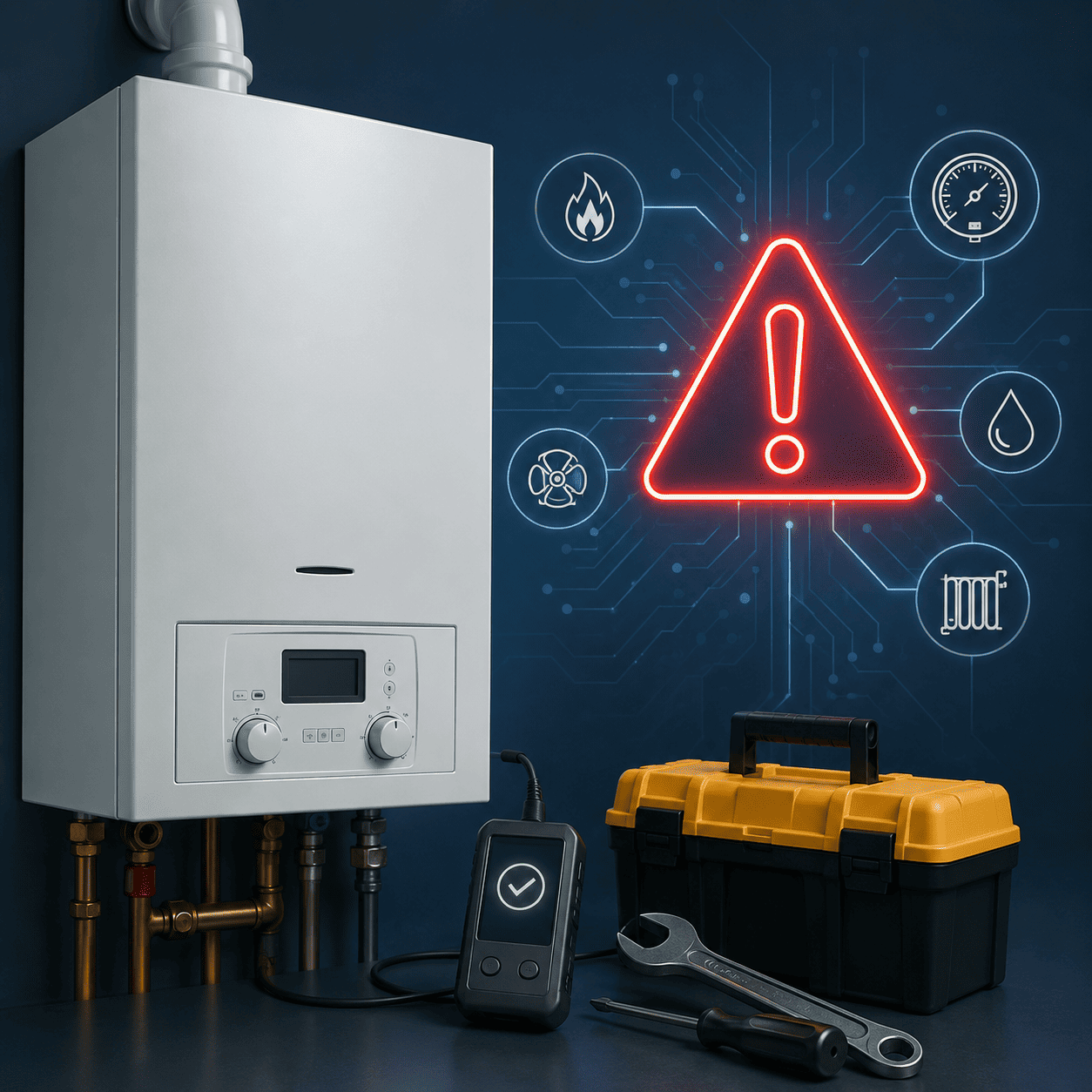
There is nothing quite as frustrating as waking up on a freezing winter morning to discover your radiators are stone cold, there is no hot water for your shower, and your boiler is flashing a cryptic alphanumeric code on its digital interface. This "lockout" state often sends homeowners into an immediate panic, leading to hasty and expensive emergency plumber call-outs. However, modern heating units are highly intelligent, sensor-driven machines designed to halt operations instantly if they detect even the slightest anomaly, purely to keep your household safe.
Welcome to the alzone.az comprehensive diagnostic guide. In this extended article, we will decode these mysterious messages, explain the underlying mechanics of why your boiler shuts down, and show you how to safely resolve the most common faults without needing a toolbox.
The Anatomy of a Boiler Lockout: Why Does It Happen?
Your central heating system is a complex network of water, gas, and electricity. To manage these dangerous elements safely, your boiler’s Printed Circuit Board (PCB) acts as a central brain, constantly communicating with a series of internal monitors. These include NTC thermistors (for temperature), pressure switches, fan speed sensors, and flame detection electrodes.
If the PCB notices that water is not flowing fast enough, the gas pressure has dropped, or the exhaust fan is failing to clear carbon monoxide, it triggers a 'lockout'. It shuts the gas valve immediately. This self-preservation feature prevents catastrophic failures, fires, or gas leaks. Maintaining the efficiency of your property's Heating systems requires understanding that these codes are essential diagnostic tools, not just annoying alarms.
Deep Dive into Common Boiler Faults and How to Fix Them
While every manufacturer (like Worcester Bosch, Vaillant, Baxi, or Navien) uses a slightly different numbering system, the underlying mechanical issues are practically universal. Let's explore the most common scenarios:
1. The Notorious Low-Pressure Fault (e.g., F22, E119, 108)
Your boiler operates on a sealed, pressurized circuit. Over time, air gets into the system, or micro-leaks occur in the radiator valves, causing the water pressure to drop. When the gauge falls below 1.0 bar, the boiler shuts down to prevent the pump from running dry and burning out.
-
The Fix: Locate the filling loop—usually a silver braided hose or a built-in blue/black lever underneath the unit. Open the valves slowly to let cold mains water into the system. Keep a close eye on the pressure dial and close the valves firmly once the needle hits 1.5 bar.
2. Ignition Failure / No Gas Detected (e.g., F28, EA, 501)
If you hear the boiler clicking (trying to spark) but it fails to roar into life, the flame sensor isn't detecting a fire.
-
The Fix: First, check if your gas hob works to ensure there isn't a wider neighborhood gas cut. Ensure your gas meter valve is open. If you have a prepaid gas meter, check your credit. If everything is fine, the gas line might just have an airlock. Press and hold the 'Reset' button for 3-5 seconds to force the boiler to try the ignition cycle again.
3. Frozen Condensate Pipe (Flue or Airflow faults)
During sub-zero temperatures, high-efficiency condensing boilers face a unique problem. They expel a small amount of acidic water (condensate) through a plastic pipe leading outside. If this pipe freezes solid, the water backs up into the boiler, and a sensor shuts the system down to prevent flooding.
-
The Fix: Find the white plastic pipe outside your external wall. Boil a kettle and let the water cool slightly (so it's hot but not boiling, which could crack the plastic). Pour the warm water over the frozen section to thaw the ice blockage, then reset your boiler.
Boiler Fault Diagnostics Overview
To make things easier, we have compiled a quick reference table of symptoms, causes, and your immediate DIY actions:
| Fault Indicator (Code type) | Potential Cause of the Issue | Safe DIY Solution |
| Low Pressure Fault (F37, E10) | Water has gradually escaped from the closed heating loop. | Use the filling loop to restore water pressure to 1.5 bar, then securely close the valve. |
| Ignition / Flame Failure (F28, E01) | The burner fails to ignite due to lack of gas or a blocked pilot. | Verify other gas appliances are working, check valves, and press the 'Reset' button. |
| Exhaust / Condensate Blockage (E03) | Extreme cold weather has frozen the external condensate pipe, or wind is blowing down the flue. | Thaw the external white plastic pipe with warm water, ensure the flue is clear of ice/debris. |
| Overheat Lockout (E02, F20) | Internal water temperature exceeded safe limits; poor circulation. | Bleed your radiators to release trapped air, ensuring the circulation pump can push water freely. |
Repair or Replace? Making the Smart Investment
Constantly repairing a boiler that is over 10-12 years old is a false economy. If you are frequently resetting the unit, replacing expensive parts like the PCB or the heat exchanger, or dealing with loud banging noises (kettling), upgrading your hardware is the most logical financial step. Explore our premium range of high-efficiency Combis that offer vastly better fuel economy, smart thermostat integration, and total peace of mind during the harshest winters.
Frequently Asked Questions (FAQ)
1. Is it dangerous to repressurise my boiler myself?
Not at all. Repressurising is considered standard user maintenance and is perfectly safe. Just be careful to keep an eye on the gauge and stop filling once it reaches 1.5 bar. If you over-pressurise the system (e.g., above 3 bar), the pressure relief valve will activate and dump water outside.
2. Why does my pressure gauge drop to zero every few days?
If you have to top up the pressure multiple times a week, you have a leak. This could be a visible leak on a radiator valve, a hidden leak under your floorboards, or a failed internal expansion vessel inside the boiler. This requires a professional heating engineer to diagnose.
3. The boiler works for hot water, but my radiators remain stone cold. What should I check?
This usually points to a stuck diverter valve (the mechanical part that switches water flow between the taps and the radiators) or a communication error with your room thermostat. Ensure your thermostat has fresh batteries and is turned up high. If the issue persists, the diverter valve likely needs replacing by a professional.
Conclusion
A flashing error code on your boiler is a vital diagnostic feature, not an immediate disaster. By familiarizing yourself with the basic signs of low pressure, frozen pipes, and gas lockouts, you can confidently resolve minor issues without waiting in the freezing cold for an engineer. Always remember the golden rule of home heating: while resetting, bleeding radiators, and repressurising are completely safe DIY tasks, you must never remove the boiler casing to inspect internal gas or electrical components yourself. Always call a registered gas safe professional for internal works.