
What is an Expansion Tank, How Does It Work, and Why is It Important?
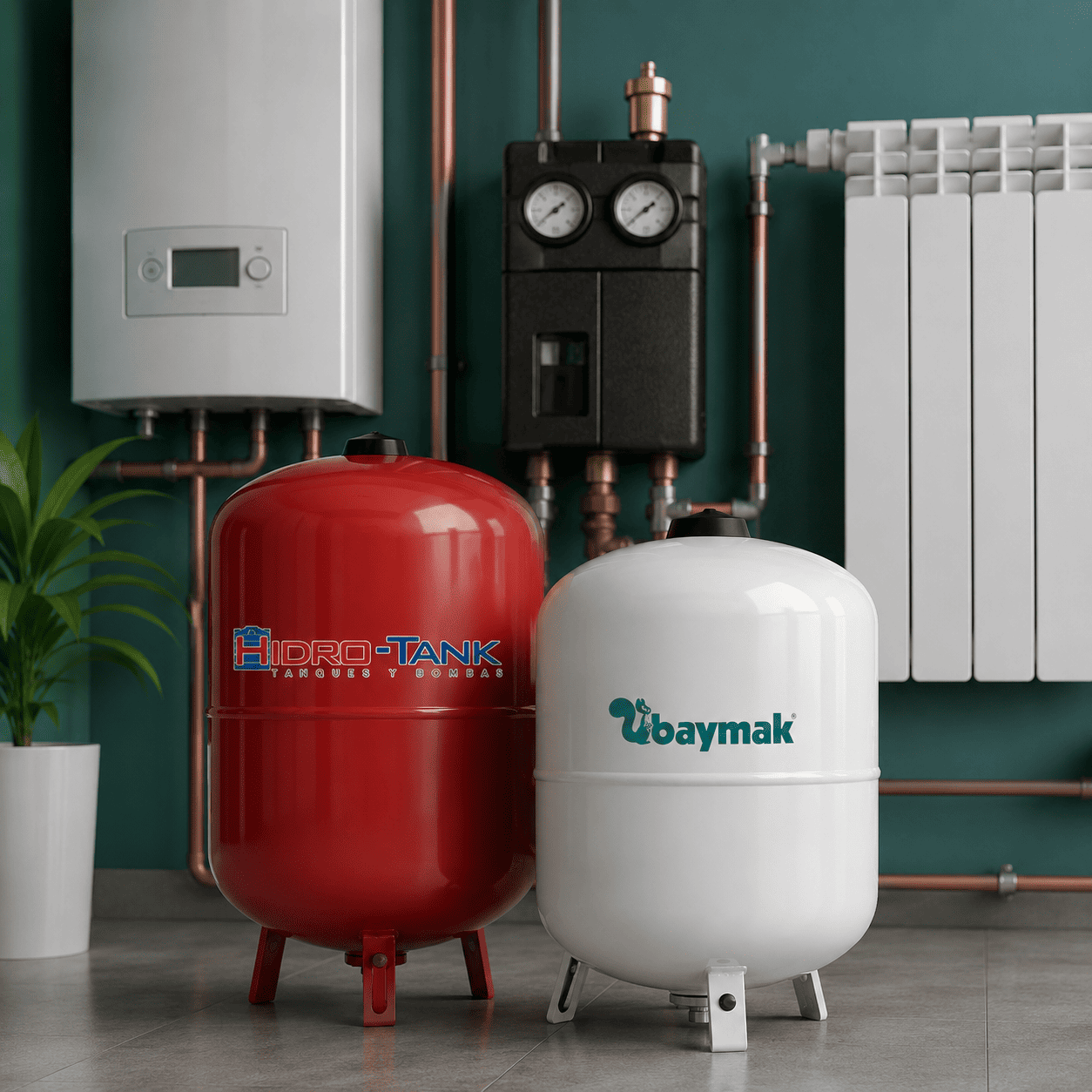
One of the most critical components ensuring the long-lasting, uninterrupted, and most importantly, safe operation of heating systems, combi boilers, and centralized water supply networks is the expansion tank. In closed systems, according to the laws of physics, as water heats up, its volume expands, creating additional, undesirable pressure in the pipelines. The expansion tank absorbs this excess volume, ensuring that the pressure in the system remains at a safe level. Thus, bursting of pipes, leaking of radiators, and damage to boiler room equipment are prevented.
You can get acquainted in detail on our website with high-quality Heating systems that fully meet the needs of your home, office, or industrial facility.
Working Principle and Main Advantages of the Expansion Tank
The internal structure of the expansion tank is based on a very simple but crucial engineering solution. The tank is basically divided into two parts: in one chamber is the water in the system, and in the other chamber is pressurized air or gas (usually nitrogen). A special elastic membrane (rubber diaphragm) separates these two chambers.
How does it work?
As the water in the system heats up, its volume increases, and this excess water fills the expansion tank. As water fills the tank, it pushes the membrane toward the air chamber, compressing the gas inside. When the water cools down, the compressed gas pushes the membrane back, returning the water to the system. Thanks to this continuous process, pressure fluctuations are not experienced in the system.
Main advantages it brings to the system:
-
Pressure Stabilization: Prevents hydraulic shocks (water hammer effect) in pipes, valves, and connection points.
-
Extending Equipment Life: Prolongs the life of the motor by preventing the pump from turning on and off unnecessarily.
-
Maximum Safety: Reduces the risk of boiling, leaking, or sudden bursting caused by overheating to zero.
Main Types and Purposes of Expansion Tanks
Based on the application area and internal structure, expansion tanks are divided into several categories:
-
Open Type Expansion Tank: It has an open-to-atmosphere structure and is installed at the highest point of the system. Since the probability of water evaporation is high, the system's water level should be checked regularly and refilled.
-
Closed Type (Membrane) Expansion Tank: It has a completely hermetic structure. Gas and water do not mix due to the membrane. It automatically regulates pressure and minimizes the risk of corrosion.
-
Hydrophore (Water Supply) Tank: Works synchronously with the pump in water supply networks. It prevents the pump from starting every time a tap is opened, creates a pressurized water reserve, and saves electrical energy.
-
Tanks for Solar Energy Systems: Equipped with special, highly thermally resistant membranes so that the liquid inside the solar collectors can withstand extreme temperature changes.
Installation and Maintenance Guidelines: What Should Be Considered?
-
Mounting Position: In heating systems, the tank should be installed near the suction line (return line) of the circulation pump.
-
Safety Group: A manometer, air vent, and safety valve must absolutely be installed on the tank or on the line closest to it.
-
Periodic Maintenance: In closed membrane tanks, the air pressure should be checked with a compressor at least once a year, and air should be pumped in if necessary.
Engineering Comparison of Main Brands
Quality should be the main criterion when choosing equipment for your heating and water supply projects. On our website, we present the Baymak and Hidro Tank brands, which are most preferred by users:
| Technical Feature | Baymak | Hidro Tank |
| Main Application Area | Combi, individual, and central heating systems | Heavy industry, complex hydrophore networks |
| Body Material | Electrostatic powder-coated carbon steel | Thick steel reinforced against physical impacts |
| Membrane Type | Rubber diaphragm resistant to temperature fluctuations | Easily replaceable EPDM membrane |
| Operational Advantage | Compact dimensions, easy mounting in narrow spaces | Long service life thanks to modular structure |
To choose the model with the most suitable water capacity and working pressure for your system, you can visit the Expansion tank category on our website.
Frequently Asked Questions (FAQ)
1. What happens in the system if an expansion tank is not installed?
As the water volume increases, the internal pressure will rise, causing leaks or sudden bursts at pipe connections or the internal parts of the boiler. In water supply, the motor will burn out in a short time.
2. What are the technical differences between open and closed expansion tanks?
Open-type tanks are in contact with the atmosphere, allowing water evaporation. Closed-type tanks are completely isolated, preventing the system from taking in air and avoiding corrosion.
3. How should I calculate the volume of the expansion tank for my home?
The volume of the tank should be approximately 10-15% of the total water volume circulating in the system. If there are 100 liters of water, you should choose at least a 10-15 liter expansion tank.
4. At what air pressure should the membrane tank operate?
The air pressure of a closed tank should be set 0.2 - 0.3 bars below the system's standard working pressure.
Conclusion
The expansion tank is the protective shield of the system. Choosing it according to requirements and installing it professionally saves you from expensive repair costs that may arise in the future. You can secure your system by exploring the global brands offered on Alzone.az.